
Why Is a Flywheel Housing Important?

Why Is a Flywheel Housing Important?

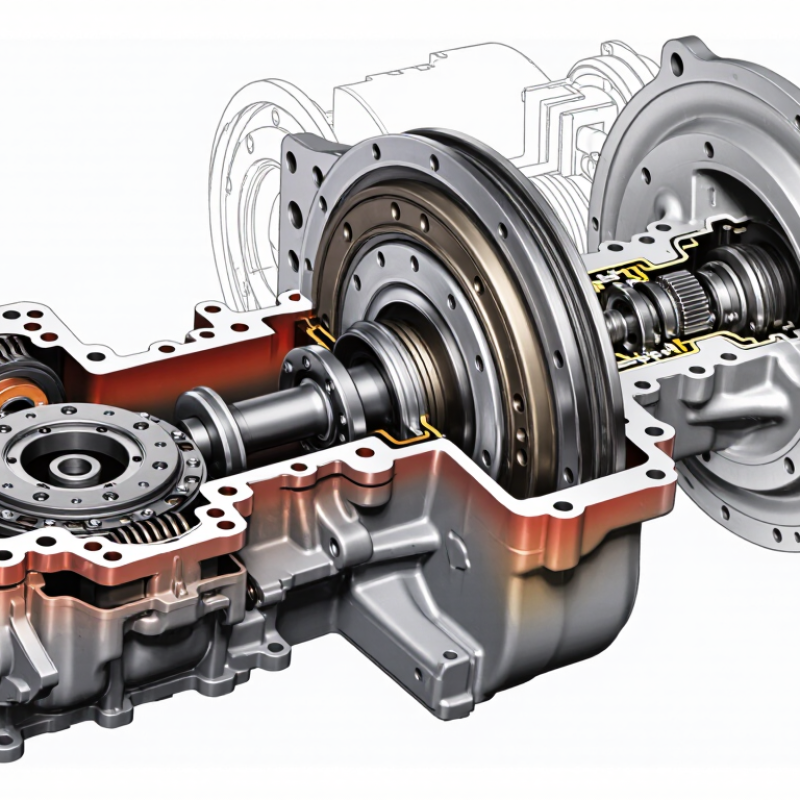
A Flywheel Housing may look like a simple metal enclosure, but its role is far more demanding. It connects the engine block with the transmission while protecting the flywheel and clutch assembly. It must maintain accurate alignment under vibration, heat, and constant rotational force. Even a small positioning error can cause clutch wear, noise, or damaging shaft stress.

C. Fayette Taylor, a respected internal-combustion-engine authority, wrote, “The engine is a machine for converting heat into mechanical work.” That principle helps explain the housing’s importance. Mechanical power must travel through connected components without losing stability. The Flywheel Housing supports that transition. It also helps contain fragments if a rotating part fails, although it should never be treated as an unlimited safety barrier.

Fit matters.

A well-designed housing provides a dependable mounting surface for the starter, clutch components, and transmission. Its stiffness reduces unwanted movement between the engine and drivetrain. Its material must also tolerate temperature changes without excessive distortion. In workshop conditions, technicians often notice problems through uneven clutch contact, oil leaks, or unusual vibration before complete failure occurs.

Still, strength alone does not guarantee quality. A housing can appear solid while suffering from poor machining, hidden cracks, or incorrect bolt alignment. This is where inspection records, manufacturer specifications, and practical installation experience become essential. The details are easy to overlook. They should not be. Understanding the Flywheel Housing means understanding how protection, alignment, and power transfer depend on one carefully engineered component.
Why Is a Flywheel Housing Important?

What Is a Flywheel Housing?

A flywheel housing is the structural enclosure between an engine and its transmission. It surrounds the flywheel, clutch assembly, and nearby rotating components. Its shape helps keep these parts aligned during operation. It also provides mounting points for the transmission and starter motor. Without accurate alignment, vibration and uneven wear can develop quickly.

It protects moving parts from dust, tools, and accidental contact. Some housings also help retain lubricant around connected components. The housing must remain rigid under engine torque and repeated temperature changes. During servicing, technicians inspect bolt holes, mounting faces, cracks, and signs of oil leakage. A small crack near a mounting point may become a serious alignment problem later. It is not merely a cover.

The term can be slightly misleading. The housing does not usually contain the entire engine’s rotating system. Its exact design depends on the engine layout, clutch type, and transmission connection. In practical repairs, a clean mounting surface matters as much as the housing itself. Dirt between the housing and transmission can create a tiny gap. That gap may produce noise, vibration, or difficult shifting. Measurement is important. Guesswork is risky.

A properly fitted flywheel housing supports safer power transfer and more predictable maintenance. However, it cannot correct a bent flywheel or worn bearings. Those faults require separate inspection. The housing is one part of a larger mechanical system, and its condition should be judged within that system.

Why Is a Flywheel Housing Important?

A flywheel housing helps maintain drivetrain alignment, supports the transmission connection, reduces noise exposure, and provides a protective enclosure around a rotating component that stores significant kinetic energy.

The chart shows the calculated rotational energy of a flywheel with an assumed moment of inertia of 0.25 kg·m². Energy is calculated using E = ½Iω², where rotational energy increases with the square of speed. This illustrates why the housing must provide secure containment and accurate alignment.

How Does a Flywheel Housing Support the Powertrain?

Why Is a Flywheel Housing Important?

How Does a Flywheel Housing Support the Powertrain?

A flywheel housing connects the engine, clutch, and transmission into one controlled structure. It keeps the crankshaft and transmission input shaft aligned during operation. Even small alignment errors can create vibration, uneven clutch wear, and noisy gear engagement. The housing also absorbs mounting loads from torque reactions. That matters when the engine accelerates suddenly or the vehicle climbs a steep grade.

According to the U.S. Department of Energy’s Transportation Energy Data Book, conventional vehicles convert roughly 20% of fuel energy into movement. Much of the remaining energy becomes heat, vibration, and mechanical loss. A rigid, accurately machined housing cannot remove every loss. It can, however, protect the powertrain’s connection points and reduce avoidable movement. SAE dimensional standards also emphasize repeatable mounting geometry for powertrain interfaces. In real service, dirt, heat cycles, and imperfect installation can still cause problems. Design assumptions are not always reality.

Tips: Check the housing for cracks, loose fasteners, oil contamination, and damaged dowel locations. Use a dial indicator when alignment concerns appear. Inspect clutch dust patterns, because uneven contact can reveal hidden positioning errors. Allow cooling time before inspection. Hot metal can mislead measurements.

Why Is a Flywheel Housing Important? - How Does a Flywheel Housing Support the Powertrain?

Support Function How the Flywheel Housing Helps Powertrain Area Affected Typical Design Considerations Possible Result of Poor Condition
Structural connection Connects the engine rear face to the transmission or another driven unit, creating a rigid powertrain assembly. Engine-to-transmission interface Flange strength, bolt pattern, housing stiffness, and accurate mating surfaces. Loose joints, abnormal vibration, or movement between major powertrain components.
Shaft alignment Maintains the relative position of the crankshaft, flywheel, clutch, and transmission input shaft. Rotating driveline Concentricity, dowel locations, bearing supports, and dimensional tolerances. Clutch wear, input-shaft damage, gear noise, or difficulty shifting.
Flywheel and clutch enclosure Surrounds the rotating flywheel and clutch assembly and helps keep personnel and nearby components away from moving parts. Flywheel, clutch, and bell area Adequate clearance, protective strength, inspection access, and secure fasteners. Contact damage, increased safety risk, or contamination of the clutch area.
Vibration control Provides a stiff mounting structure that helps control the transmission of engine and torsional vibrations. Engine mounts and driveline Material rigidity, wall thickness, mounting geometry, and balanced rotating components. Rattling, harshness, fatigue cracks, and accelerated fastener loosening.
Starter motor positioning Provides the mounting location that positions the starter gear in relation to the flywheel ring gear. Engine starting system Starter mounting accuracy, ring-gear clearance, and adequate local strength. Grinding during cranking, incomplete engagement, or starter-gear wear.
Bearing and seal support Can provide locations or reference surfaces for rear crankshaft seals, pilot bearings, and related components, depending on the design. Crankshaft and transmission input shaft Seal alignment, bearing fit, surface finish, and resistance to thermal distortion. Oil leakage, bearing noise, clutch contamination, or premature component wear.
Load distribution Distributes reaction forces and mounting loads across the engine and transmission connection. Powertrain mounts and casing Load paths, ribbing, bolt preload, and resistance to bending and fatigue. Cracks, distorted mounting faces, or repeated bolt failures.
Contamination management Helps separate the clutch and flywheel compartment from road debris, dust, and fluid spray when properly sealed. Clutch friction surfaces and seals Joint sealing, drain provisions, cover condition, and protection from splash paths. Clutch slipping, uneven engagement, or accelerated friction-material wear.
Heat and service access Provides a defined enclosure around heat-generating rotating parts while allowing access for inspection or maintenance where designed. Clutch, flywheel, and rear engine area Heat resistance, ventilation strategy, inspection openings, and service clearance. Heat-related degradation, difficult servicing, or hidden damage during inspections.
Key takeaway: A flywheel housing is a structural, alignment, protection, and service-support component. Its dimensional accuracy and rigidity directly influence clutch operation, starter engagement, vibration behavior, sealing performance, and overall powertrain durability.

Which Components Does the Housing Protect?

Why Is a Flywheel Housing Important?

Which Components Does the Housing Protect?

A flywheel housing surrounds the flywheel and clutch assembly at the rear of an engine. These parts rotate quickly and store significant mechanical energy. The housing keeps dust, loose tools, and clothing away from the rotating surfaces. That basic barrier matters.

It also protects the starter ring gear, clutch disc, pressure plate, and rear crankshaft area. The ring gear needs accurate tooth engagement with the starter pinion. If debris damages those teeth, starting may become noisy, slow, or unreliable. The housing also helps prevent accidental contact with the clutch, where heat and friction can create sharp, hot surfaces.

Protection is only one function. A properly machined housing supports alignment between the engine and transmission. Even a small offset can cause vibration, uneven clutch wear, or premature bearing damage. Technicians usually inspect mounting faces, dowel holes, cracks, and oil contamination before installation. These details are easy to overlook.

A damaged housing may still look serviceable from outside. That can be misleading. Cracks near mounting points may grow under vibration, while distorted faces can place stress on connected components. In practical maintenance, cleanliness and measurement are as important as visual inspection. I would not treat a housing as a simple cover; that assumption often leads to costly repeat repairs.

How Does It Improve Safety and Engine Performance?

A flywheel housing improves safety by enclosing a fast-spinning flywheel, clutch, and connecting hardware. Without a rigid barrier, a failed component could release fragments at dangerous speed. The U.S. Bureau of Labor Statistics reported that contact with objects and equipment caused about 15% of fatal workplace injuries in 2022. That figure is not flywheel-specific, but it shows why physical guarding remains essential in workshops and industrial facilities.

The housing also supports engine performance. It keeps the flywheel aligned with the crankshaft and provides a stable mounting point for the transmission. Accurate alignment reduces vibration, uneven clutch wear, and energy loss during power transfer. ISO 20816-1 recommends evaluating machine vibration through measured velocity, acceleration, and displacement. In practice, technicians can detect a problem through unusual noise, heat near the bell area, or a changing vibration pattern. Small clues matter.

Material choice deserves careful attention. Cast metal offers stiffness and impact resistance, while lighter alloys can reduce system weight. The compromise is real. A lighter housing may transmit more noise or deform under severe loading. Regular inspection should check cracks, loose fasteners, damaged inspection covers, and oil contamination. Maintenance records from the U.S. Department of Labor consistently identify poor inspection and inadequate guarding as recurring risk factors. A housing is not a cure by itself; installation quality still decides much of its value.

What Factors Determine Flywheel Housing Selection?

Flywheel housing selection begins with the engine and transmission interface. The housing must match bolt patterns, pilot diameters, and crankshaft centerlines precisely. Even a small offset can create clutch wear, noise, or damaging vibration. Technicians should verify drawings against physical measurements, not rely on familiar dimensions.

Load capacity is another decisive factor. The housing must withstand engine torque, clutch forces, and the weight of connected components. Cast iron offers strong vibration resistance, while aluminum reduces weight and improves heat dissipation. Material choice depends on duty cycle, temperature, corrosion exposure, and maintenance conditions. A heavy industrial engine needs different protection than a compact generator.

Operating conditions also influence the design. Consider available space, starter position, inspection openings, and access for clutch replacement. Sealing surfaces require careful attention when dust, oil, or moisture is present. In field service, incomplete records can cause mistakes. A previous installation may appear suitable but still hide alignment problems. Engineers should check runout, fastener grades, mounting rigidity, and ventilation before approval. It is easy to overemphasize strength and overlook service access. That oversight can turn a simple repair into a long shutdown. Practical trials, dimensional checks, and documented inspection results make the final selection more dependable.