Top 10 Industrial Water Pumps for Efficient Industrial Use?
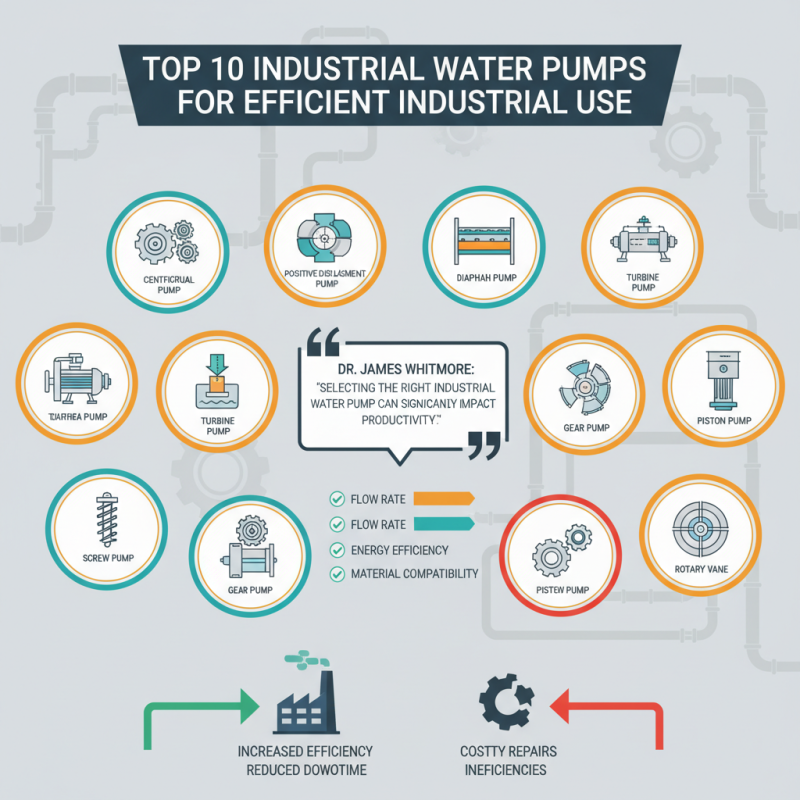
In the industrial world, efficiency is paramount. One expert in the field, Dr. James Whitmore, states, "Selecting the right industrial water pump can significantly impact productivity." His insight highlights the importance of choosing appropriate water pumps for various applications. Industrial water pumps are essential for transporting fluids within manufacturing processes, water treatment plants, and more.
These pumps play a crucial role in maintaining operational flow and ensuring the smooth functioning of industrial systems. However, not all water pumps are created equal. Each has unique specifications and capabilities, often leading companies to face challenges in their selection. It’s vital to consider factors such as flow rate, energy efficiency, and material compatibility.
With numerous options available, industries must navigate through competing products. Evaluating the pros and cons of each type can sometimes be overwhelming. The right choice can lead to increased efficiency and reduced downtime, while the wrong selection may result in costly repairs and inefficiencies. Understanding these differences is key in making an informed decision for the best industrial water pump suited to specific needs.
Criteria for Selecting Industrial Water Pumps for Efficiency
When selecting industrial water pumps, efficiency is key. Various factors come into play. A reputable pump should have a high efficiency rating. This often translates to lower energy costs and better performance. Consideration of materials is also crucial. Pumps constructed from durable materials can withstand harsh environments. Corrosion resistance is a must for longevity.
Flow rate and pressure are essential metrics for decision-making. Ensure the pump meets the specific requirements of your application. If the flow is too low, processes may slow down. If the pressure is too high, it could damage equipment. Regular maintenance also plays a role in overall efficiency. Even the best pumps can falter without proper care.
It’s worth noting that efficiency can vary in different applications. A pump that works well in one scenario may not perform the same elsewhere. Gathering empirical data from similar use cases can lend insight. You should always validate that the chosen pump aligns with operational needs. Each project may require a fresh evaluation of requirements and capabilities.
Overview of Different Types of Industrial Water Pumps
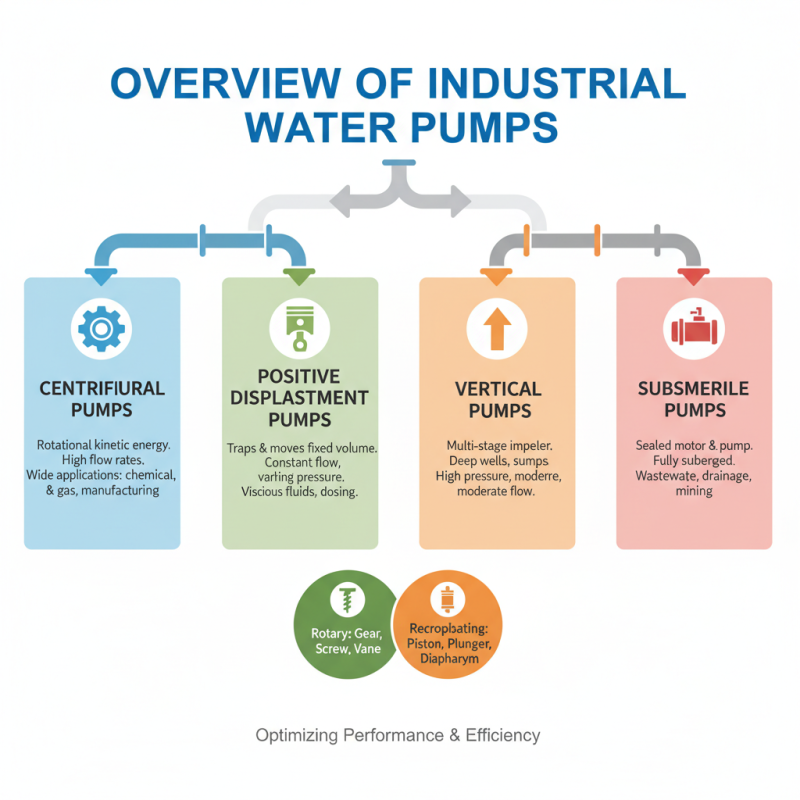
Industrial water pumps play a vital role in many sectors. They are used for transporting water and other fluids essential to various operations. Understanding the types of industrial water pumps can help optimize performance and efficiency.
Centrifugal pumps are among the most common types. They work by converting rotational energy into fluid movement. These pumps are suitable for high flow applications. However, they can struggle with viscous liquids and may require specific adjustments. Positive displacement pumps, on the other hand, excel in handling thick fluids. They move the fluid by trapping a fixed amount and forcing it through a discharge. These pumps can be inefficient at higher speeds, leading to potential issues.
Submersible pumps are designed to operate underwater. They are often used in dewatering and sewage applications. While effective, they may suffer from premature wear if not maintained properly. Each type of pump has its unique advantages and challenges. Selecting the right pump depends on specific industry needs and fluid characteristics. It's essential for users to consider these factors carefully to ensure they meet efficiency and reliability standards.
Top Ten Industrial Water Pumps with Performance Ratings
When selecting industrial water pumps, performance ratings are crucial for efficiency. A report by the Hydraulic Institute indicates that high-efficiency pumps can save up to 30% in energy costs. This makes careful selection vital in industries such as manufacturing and construction.
Pumps are rated on parameters like flow rate, head, and efficiency. For example, a pump with a flow rate of 150 gallons per minute and 80% efficiency is more desirable in high-demand applications. This ensures optimal performance while reducing overall operational costs. However, achieving this efficiency often requires regular maintenance and assessment.
It's important to note that not all pumps perform consistently under variable conditions. Many factors, such as fluid type and temperature, can impact performance ratings. Some pumps may underperform when faced with unexpected changes in the operating environment. Continuous monitoring and adjustments are needed to maintain efficiency. There’s always a balance to achieve between reliability and adaptability in industrial settings.
Comparative Analysis of Cost and Efficiency in Water Pumps
The choice of industrial water pumps greatly impacts operational efficiency. Recent industry reports indicate that optimal water pump selection can enhance efficiency by up to 30%. That's significant, especially in large-scale operations where the cost of energy is a primary concern. A comparative analysis shows that different types of pumps, like centrifugal and positive displacement pumps, offer varying efficiency levels depending on the application.
Cost is an essential factor in pump selection. A detailed study revealed that the initial purchase price does not always correlate with long-term operational savings. For instance, while a lower-priced model may seem appealing, it could result in higher maintenance costs and energy consumption. An evaluation of pumps indicates that energy costs account for about 75% of total lifecycle expenses. Thus, investing in a more efficient pump can lead to a better return on investment.
Pump performance should also be assessed in real-world conditions. Data shows that pumps often underperform due to inadequate sizing or misapplication. Regular monitoring of pump efficiency and conducting maintenance checks can minimize these issues. Operators must reflect on their choices and ensure they optimize both cost and efficiency for sustainable operations in industrial settings.
Maintenance Best Practices for Industrial Water Pumps
Proper maintenance of industrial water pumps is crucial for operational efficiency. According to a 2021 report by the Hydraulic Institute, proper maintenance can enhance pump lifespan by up to 30%. Routine checks on seals, impellers, and bearings can prevent secondary failures. Regular monitoring of vibration levels helps identify potential issues early, reducing unexpected downtime.
Scheduled maintenance should include prompt lubrication of moving parts. Ideal lubrication intervals depend on operating hours. Some pumps may require attention every 500 hours. Others might need it after 2,000 hours of operation. Attention to coolant levels is vital, preventing overheating. Neglecting these aspects can lead to pump failure and costly repairs.
Training staff on pump operation and maintenance is essential. It ensures that personnel can spot issues before they escalate. A survey by the American Society of Mechanical Engineers revealed that 38% of pump failures stem from human error. Ongoing education minimizes these risks. In addition, incorporating advanced monitoring technology can provide real-time insights. These proactive strategies build a more reliable water pumping system.
Top 10 Industrial Water Pumps for Efficient Industrial Use