Top 5 Diaphragm Vacuum Pumps for Global Buyers in 2026?
In the rapidly evolving world of vacuum technology, diaphragm vacuum pumps have emerged as essential tools for various industries. Renowned expert Dr. Lisa Martin, a leading authority in vacuum systems, once stated, "The diaphragm vacuum pump combines efficiency and reliability, making it integral to modern processes." This highlights the critical role these pumps play in applications ranging from laboratory research to manufacturing.
As we look ahead to 2026, global buyers seek high-quality diaphragm vacuum pumps that meet specific operational demands. The market is increasingly competitive, pushing manufacturers to innovate while ensuring performance and longevity. The need for reliable vacuum solutions is more pressing than ever, prompting companies to invest in top-tier technology that caters to their unique needs.
However, not all diaphragm vacuum pumps deliver the promised effectiveness. Buyers must navigate through varying specifications and performance claims. Understanding the nuances of different models is vital. Every pump has its strengths and weaknesses, and informed decisions can avoid costly mistakes in crucial operations. Continuous assessment of recent advancements will ensure businesses remain competitive while achieving optimal results.
Overview of Diaphragm Vacuum Pumps: Importance in Various Industries
Diaphragm vacuum pumps play a crucial role in many industries, from pharmaceuticals to food processing. Their ability to provide a clean and oil-free vacuum makes them suitable for sensitive applications. In laboratory settings, these pumps ensure that contaminants do not interfere with experiments. They can handle aggressive chemicals, which is essential for research and development.
In the automotive industry, diaphragm pumps are vital for precise control in tire inflation systems and exhaust testing. Their reliability minimizes downtime during production. Still, users must be aware of maintenance needs. Regular checks are required to ensure optimal performance over time. Neglecting these can lead to reduced efficiency and product quality.
Moreover, these pumps are favored for their compact size and lightweight design. This makes them user-friendly in various setups. However, not all diaphragm pumps offer the same level of performance. Buyers should consider their specific application needs carefully. Each industry may require different specifications, which can complicate the selection process. An informed choice can make a significant difference in ensuring reliable operation.
Key Features to Consider When Choosing Diaphragm Vacuum Pumps in 2026
When selecting diaphragm vacuum pumps in 2026, buyers should focus on key features. The ultimate goal is efficient performance. Look for pumps with a maximum vacuum level that meets your application needs. A pump’s ability to achieve low pressures is crucial for various industrial procedures.
Consider the pump's materials. High-quality diaphragms are essential for durability and longevity. Ensure that the materials can withstand the chemicals being processed. Additionally, check for noise levels. Some pumps operate quietly, making them suitable for laboratory environments, while others may produce more noise that can be disruptive.
Another important aspect is maintenance requirements. Diaphragm pumps should offer easy access for maintenance tasks. Regular servicing is vital for optimal functionality. Assess the warranty and customer support offered by manufacturers. Responsive customer service provides reliability when issues arise. This can prevent costly downtimes in critical operations. Always reflect on your specific needs and the working environment for the best fit.
Market Trends: Growth Projections for Diaphragm Vacuum Pumps by 2026
The diaphragm vacuum pump market is poised for significant growth by 2026, driven by rising demand in various sectors. Reports indicate a projected CAGR of 5.4% over the next few years. This growth is influenced by advancements in technologies, and the increasing requirement for efficient vacuum solutions in labs and industrial applications.
In recent years, the pharmaceutical and food industries have accelerated their reliance on diaphragm vacuum pumps. These sectors prioritize hygiene and precision, making diaphragm pumps a preferred choice due to their oil-free operation. A study noted that nearly 70% of users in these fields reported improved process reliability with diaphragm pumps. This trend highlights a shift towards higher standards in production and safety.
However, some challenges remain. The initial investment cost can be significant, which may deter smaller players from upgrading to more advanced systems. Moreover, maintenance of diaphragm pumps requires expertise. As the industry evolves, there's a growing need for skilled technicians to ensure optimal performance. Addressing these gaps will be crucial for sustaining the market's momentum in the coming years.
Top Manufacturers of Diaphragm Vacuum Pumps and Their Innovations
Diaphragm vacuum pumps are crucial in various industries, from pharmaceuticals to food processing. Industry studies indicate that the global diaphragm pump market will reach USD 2.4 billion by 2026. This growth highlights the rising demand for innovative technologies and reliable solutions. Manufacturers are focusing on quality, efficiency, and sustainability in their designs.
Innovation is reshaping the diaphragm vacuum pump landscape. Many companies are implementing advanced materials that resist corrosion and wear. This enhancement extends the pump's lifespan and reduces maintenance costs. Recent insights reveal that smart technologies, such as IoT connectivity, help monitor performance and predict failures. These integrations lead to improved reliability and efficiency.
Despite these advancements, challenges remain. Some manufacturers still rely on outdated designs that lack efficiency. There is a call for further research to enhance energy efficiency. The industry grapples with balancing innovation and cost. Buyers must consider both performance and reliability when selecting pumps.
Top 5 Diaphragm Vacuum Pumps Market Insights 2026
Applications of Diaphragm Vacuum Pumps in Laboratory and Industrial Settings
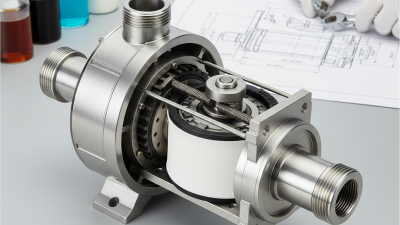
Diaphragm vacuum pumps are essential in both laboratory and industrial settings. These pumps create a vacuum by using a flexible diaphragm that works without oil or other lubricants. This feature makes them particularly suitable for environments that require a clean and inert atmosphere. A report by the International Journal of Vacuum Science and Technology indicated increased use in research laboratories, showing a growth rate of 8% from 2022 to 2026.
In laboratory settings, diaphragm vacuum pumps are often used for filtration, degassing, and sample preparation. Their ability to operate at low pressure makes them ideal for handling sensitive materials. Many labs have reported fewer contamination issues when utilizing these pumps. Additionally, their quiet operation is favorable in environments where noise control is paramount.
There are challenges when using diaphragm vacuum pumps, such as wear and tear over time. The lifespan can be affected by the nature of the gases being pumped. Regular maintenance is crucial to ensure optimal performance. Keeping an eye on the diaphragm's condition can prevent unexpected failures. Proper training for personnel is vital for effective usage.
Consider selecting a pump that aligns closely with your specific application. Not all diaphragm pumps perform equally under varying conditions. Evaluate the performance parameters, such as flow rate and ultimate vacuum level.
Top 5 Diaphragm Vacuum Pumps for Global Buyers in 2026
| Model |
Maximum Flow Rate (L/min) |
Ultimate Vacuum (mbar) |
Weight (kg) |
Applications |
| Model A |
30 |
5 |
15 |
Laboratory Research, Chemicals |
| Model B |
25 |
7 |
12 |
Food Processing, Packaging |
| Model C |
20 |
10 |
9 |
Medical Applications, HVAC |
| Model D |
35 |
3 |
20 |
Pharmaceuticals, Analytical Equipment |
| Model E |
40 |
6 |
18 |
Environmental Monitoring, Oil Extraction |