Plating Current Rectifier Tips for 139th Canton Fair Insights?
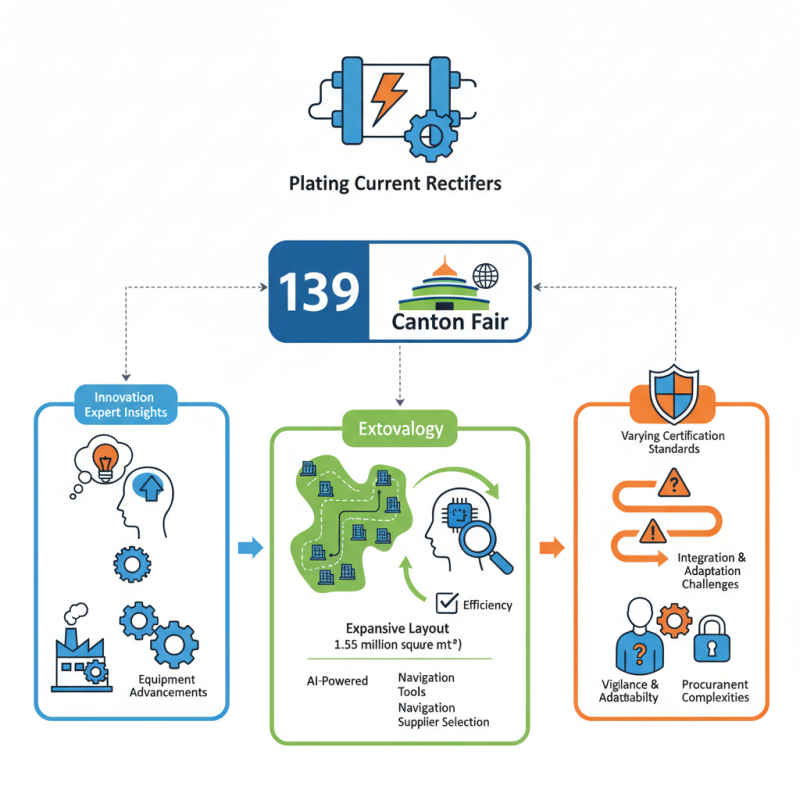
The 139th Canton Fair presents a significant opportunity for industry stakeholders, particularly in the realm of Plating Current Rectifiers. Expert John Smith, a veteran in electroplating technologies, stated, "Innovation in plating solutions leads to better quality and efficiency." This sentiment resonates deeply as exhibitors prepare to showcase cutting-edge advancements in manufacturing and equipment.
The fair’s expansive layout of 1.55 million square meters will feature various sectors, including electronics and advanced materials. This environment fosters collaboration among manufacturers, suppliers, and buyers. Attendees will benefit from AI-powered tools that enhance navigation and supplier selection. These innovations create a more efficient experience, but challenges remain in integration and adaptation.
Despite these advancements, the industry faces hurdles, such as varying certification standards across regions. This inconsistency can complicate procurement for businesses focusing on Plating Current Rectifiers. While the fair emphasizes automation and smart solutions, companies must remain vigilant and adaptable in addressing these ongoing complexities.
Overview of Plating Current Rectifier Technologies
The plating current rectifier technology has significantly evolved in recent years. This evolution reflects the growing demand for efficient and sustainable production processes. According to industry reports, the market for rectifiers is projected to reach $2.5 billion by 2025. This growth is largely driven by advancements in manufacturing technology and an increased focus on quality.
Rectifiers play a crucial role in electroplating. They convert alternating current (AC) to direct current (DC), which is essential for the plating process. Modern rectifiers are more compact and energy-efficient. They improve operational performance while minimizing energy costs. Some new models have efficiency ratings exceeding 90%. This is an impressive figure as older systems typically fall below 80%.
Tips for optimizing rectifier performance include selecting the right technologies based on your specific applications. Research indicates that the latest switching technology can enhance performance dramatically. It’s crucial to evaluate the total cost of ownership rather than just the initial investment. Regular maintenance can prevent potential failures. Clarity in operational parameters is vital for maximizing efficiency. Implementing these practices ensures better outcomes and may highlight environmental impacts needing attention.
Key Manufacturers and Innovations in Rectifier Systems
At the 139th Canton Fair, the rectifier systems showcased significant innovations. Key manufacturers demonstrated advancements in energy efficiency and compact designs. According to industry reports, the global rectifier market is projected to grow by 12% annually. This growth reflects the rising demand for power electronic devices.
Many manufacturers are focusing on sustainable practices. They are integrating eco-friendly materials and energy-saving technologies. However, not all companies are meeting these expectations. Some still rely heavily on outdated technologies, posing challenges for better energy conversion. The industry must emphasize better practices.
Tips for selecting rectifier systems include analyzing efficiency ratings and load capacity. Measure the operating environment; it can impact performance. Always consider after-sales support. A reliable service can save costs and time. Companies that invest in innovation will likely lead the market.
Market Trends and Insights from the 139th Canton Fair
As the 139th Canton Fair unfolds, key market trends are emerging in the plating current rectifier sector. According to industry reports, the demand for energy-efficient rectifiers is rising. These products play a crucial role in various manufacturing processes. The global rectifier market is expected to grow by 5% annually, reaching $1.2 billion by 2025. Eco-friendly and sustainable products are at the forefront of this expansion.
Here are some tips to consider at the fair. Engage with suppliers emphasizing efficiency. Check for certifications that guarantee low energy consumption. Understand the advancements in rectifier technology, such as pulse-width modulation. This can dramatically improve performance and reduce costs. Familiarize yourself with emerging trends, like smart rectifiers integrating IoT capabilities.
The fair also highlights the increasing competitiveness in pricing. Some manufacturers struggle to balance cost and quality. This fluctuation creates opportunities for negotiation. Additionally, supply chain challenges persist. Recent disruptions have underscored the need for robust alternatives. Companies should rethink their sourcing strategies amidst these challenges. Staying informed and adaptable is essential to thrive in this evolving market.
Plating Current Rectifier Tips for 139th Canton Fair Insights
| Category | Trends | Key Insights | Regions of Interest |
| Electronics | Increased demand for sustainable materials | Companies are shifting to eco-friendly plating solutions | Asia-Pacific, North America |
| Automotive | Growth in electric vehicle components | Demand for lightweight and durable materials | Europe, China |
| Manufacturing | Adoption of automation in plating processes | Increased efficiency and reduced labor costs | Asia-Pacific, Latin America |
| Consumer Goods | Rise in demand for personalized products | Customization options becoming key selling points | Global markets |
| Aerospace | Focus on weight reduction technologies | Innovations in high-strength alloy coatings | North America, Europe |
Best Practices for Selecting Plating Current Rectifiers
Selecting the right plating current rectifier can greatly influence the success of your project at the Canton Fair. When examining your options, consider factors like power capacity and efficiency. These elements directly impact the quality of the plating process. A well-chosen rectifier helps ensure consistent current distribution, which is crucial for achieving a uniform finish.
Here are some tips for selecting plating current rectifiers. First, assess the specifications needed for your process. Not all rectifiers are created equal. Look for models that match your production scale. Size matters, especially in maximizing your workflow. Pay attention to the cooling mechanisms. Poor heat management can lead to early failures and downtime.
Don’t overlook user feedback. Learn from real-world experiences. Some models may seem perfect on paper but fail in practice. Consider the potential need for upgrades in the future. A rectifier that lacks scalability could limit your operations down the line. Discuss options with experts, and gather insights. Surround yourself with knowledge before making a choice.
Future Directions for Rectifier Applications in Plating Industry
The future of rectifier applications in the plating industry looks promising. As technology evolves, the demand for efficiency and precision increases. Rectifiers play a crucial role in electroplating processes. They ensure a steady and controlled power supply. The miniaturization of rectifiers also enables their integration into compact systems. This trend can lead to enhanced performance in plating operations.
Tips for optimizing rectifier performance include regular maintenance checks and ensuring proper heat dissipation. A well-maintained rectifier can greatly improve efficiency. Another tip is to monitor voltage levels continuously. Fluctuations can lead to poor plating quality. Operators should be vigilant about these factors. Sometimes, the smallest oversight can create significant issues.
As the industry transitions to more automated processes, rectifiers must adapt. They need compatibility with emerging technologies like IoT. This integration could offer real-time data insights and improved process control. However, the transition is not without challenges. The industry must confront issues related to standardization and interoperability. Continuous innovation is key. Exploring these future directions will benefit all stakeholders in the plating sector.