
What is Forklift Collision Detection System and How Does It Work?
In the bustling world of warehouses and manufacturing facilities, safety remains a top priority. As forklift operations increase, so do the risks of collisions. According to a recent report by the National Safety Council, forklift-related accidents result in about 20,000 injuries annually. This staggering statistic highlights the urgent need for effective safety measures.
A Forklift Collision Detection System is an innovative solution that monitors the surrounding environment to prevent accidents. Utilizing advanced sensors and alarms, it enhances situational awareness for operators. Studies show that implementing such systems can reduce collision incidents by up to 50%. However, the technology is not without its challenges. Many businesses still underutilize these systems due to costs or lack of training.
To truly safeguard workers and assets, understanding how a Forklift Collision Detection System functions is essential. This knowledge can help companies make informed decisions about safety investments. While many are aware of the importance of such systems, questions remain about their practical implementation and effectiveness in diverse settings.
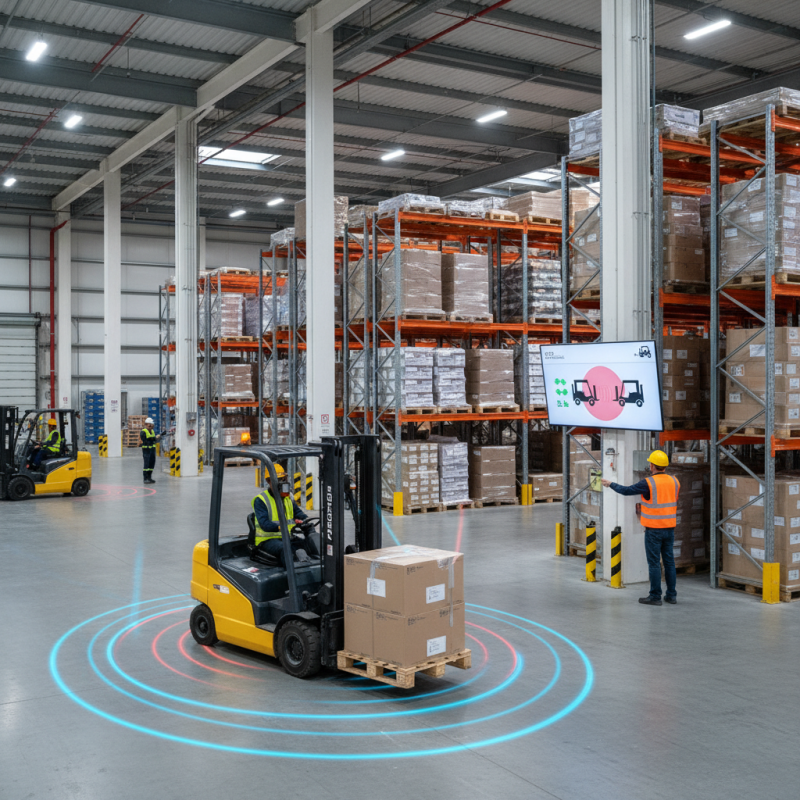
What is a Forklift Collision Detection System?
A Forklift Collision Detection System is essential in enhancing workplace safety. These systems use advanced sensors and cameras to monitor surroundings. They detect potential collisions between forklifts and other objects or personnel. According to industry reports, forklift accidents account for about 34% of warehouse injuries. This illustrates the urgent need for effective safety systems.
The technology behind these systems is increasingly sophisticated. For example, LiDAR and ultrasonic sensors are commonly utilized. They provide real-time data on the environment. Studies show that implementing collision detection systems can reduce accidents by up to 70%. This statistic highlights the importance of these systems in protecting workers and minimizing operational risks.
There is still room for improvement. Many workplaces have uneven implementations of such technology. Some operators may not fully utilize system features. Training is often inconsistent, causing inefficiencies. Companies must address these challenges to maximize safety benefits and bolster overall productivity in their operations.
Key Components of Forklift Collision Detection Systems
Forklift Collision Detection Systems enhance workplace safety in warehouses and factories. These systems employ various technologies to prevent accidents. Key components include sensors, alarms, and cameras. Sensors can detect objects in a forklift's path. They work well in busy environments, where visibility might be poor.
Alarms alert operators when danger is present. These alarms can be auditory or visual, ensuring that human operators are aware. Cameras provide additional situational awareness. They allow operators to see their surroundings better. However, reliance on technology can create complacency. Operators must remain vigilant.
Moreover, regular maintenance is essential for reliability. Systems can fail if not checked frequently. Training employees on how to use these systems effectively is equally critical. Sometimes, users overlook the importance of proper training. Inadequate training may lead to misuse or misunderstanding of the system's functions. Enhancing safety requires a comprehensive approach involving technology, training, and constant awareness.
How Forklift Collision Detection Systems Operate
Forklift Collision Detection Systems play a crucial role in enhancing safety in warehouses and industrial settings. These systems utilize advanced sensors and cameras to detect obstacles in the forklift's path. Once an obstacle is identified, the system alerts the operator, providing timely warnings to prevent potential accidents. This quick response can save lives and reduce property damage.
The technology involves several components, including proximity sensors and cameras. Proximity sensors detect nearby objects and assess their distance. Cameras offer a visual feed to the operator, enhancing situational awareness. Some systems even integrate artificial intelligence to learn from past incidents, improving detection accuracy over time. However, not all systems are foolproof. They can sometimes miss smaller obstacles or fail in poor lighting.
Proper maintenance and regular updates are essential for these systems to function optimally. Operators must also receive training to understand the system's limitations. An awareness of blind spots and a cautious approach are key in reducing reliance solely on technology. Continuous improvement and training are vital for fostering a safe working environment with forklift operations.
Benefits of Implementing Collision Detection Systems in Warehouses
Forklift collision detection systems are transformative in warehouse settings. These systems enhance safety by reducing the risk of accidents between forklifts and personnel. By utilizing sensors and cameras, they monitor the environment in real-time. This technology alerts operators to potential collisions, allowing them to react swiftly.
Implementing these systems offers numerous benefits. Improved safety records lead to decreased injury rates. Fewer accidents also mean reduced downtime, allowing for smoother operations. Moreover, such systems foster a culture of safety within warehouses, increasing employee morale.
Tips: Regularly update training for staff on using collision detection systems. Encourage open communication about safety concerns. This ongoing training can help everyone maximize the effectiveness of these systems, making the workplace safer and more efficient.
Data shows that facilities using these technologies experience less property damage. However, it is essential to remain vigilant, as systems are not infallible. Hoisting machinery can still encounter unanticipated issues. Continuous monitoring and supportive practices will help ensure these systems serve their intended purpose effectively.
Challenges and Limitations of Forklift Collision Detection Systems
Forklift collision detection systems are gaining traction in numerous industries. However, they face several challenges that hinder their effectiveness. One major challenge is the environment in which forklifts operate. Warehouses and manufacturing plants often have complex layouts. Tight spaces increase the risk of collisions, making detection more difficult. According to a 2022 report by the Occupational Safety and Health Administration (OSHA), nearly 20,000 forklift-related injuries occur annually. This statistic highlights the urgent need for dependable collision systems.
Another limitation comes from sensor technology itself. Many systems rely on infrared and ultrasonic sensors. These sensors can struggle with accuracy in certain lighting or weather conditions. For example, heavy rain can obstruct ultrasonic signals. Furthermore, the cost of advanced systems may deter businesses from adopting the latest technology. A study by the National Safety Council (NSC) found that 40% of companies still use outdated collision detection methods. This gap indicates a hesitance to invest in new solutions despite potential safety benefits.
Integrating collision detection systems can help enhance safety. Yet, inconsistent training among personnel presents barriers. Proper training ensures operators understand how systems work. A 2023 survey found that only 30% of staff received adequate training on these systems. This lack of awareness can lead to mishandling the technology, ultimately undermining its purpose. Addressing these challenges is vital for improving workplace safety in environments with forklifts.
What is Forklift Collision Detection System and How Does It Work? - Challenges and Limitations of Forklift Collision Detection Systems
| Feature | Description | Challenges | Limitations |
|---|---|---|---|
| Sensor Technology | Uses LIDAR, cameras, or ultrasonic sensors to detect obstacles in the vicinity of the forklift. | Environmental interference, such as dust or bright lights, can affect sensor performance. | Limited detection range, which may result in undetected obstacles at greater distances. |
| Data Processing | Processes input from sensors in real-time to alert operators of potential collisions. | High computational demand can lead to delays in response time. | Reliance on software and algorithms which may have bugs or require updates. |
| Alert System | Provides audio and visual alerts to the operator when a potential collision is detected. | Operator distraction due to frequent false alarms can reduce overall safety awareness. | Sensitivity settings may not be optimal for all environments. |
| Maintenance and Calibration | Needs regular maintenance to ensure sensors and systems are functioning correctly. | Maintenance routines can be time-consuming and require trained personnel. | Infrequent maintenance can lead to degradation of system performance. |
| Integration with Existing Systems | Can be integrated with warehouse management systems for enhanced functionality. | Compatibility issues with older systems may complicate integration efforts. | Requires potential upgrades to other systems for full functionality. |