How to Choose Rechargeable Lithium Batteries for Your Needs?
When it comes to selecting the right Rechargeable Lithium Batteries, expertise is crucial. Mark Stevenson, a well-known battery technology expert, has emphasized, "Choosing the right battery can make or break your device’s performance." This highlights the importance of making informed decisions.
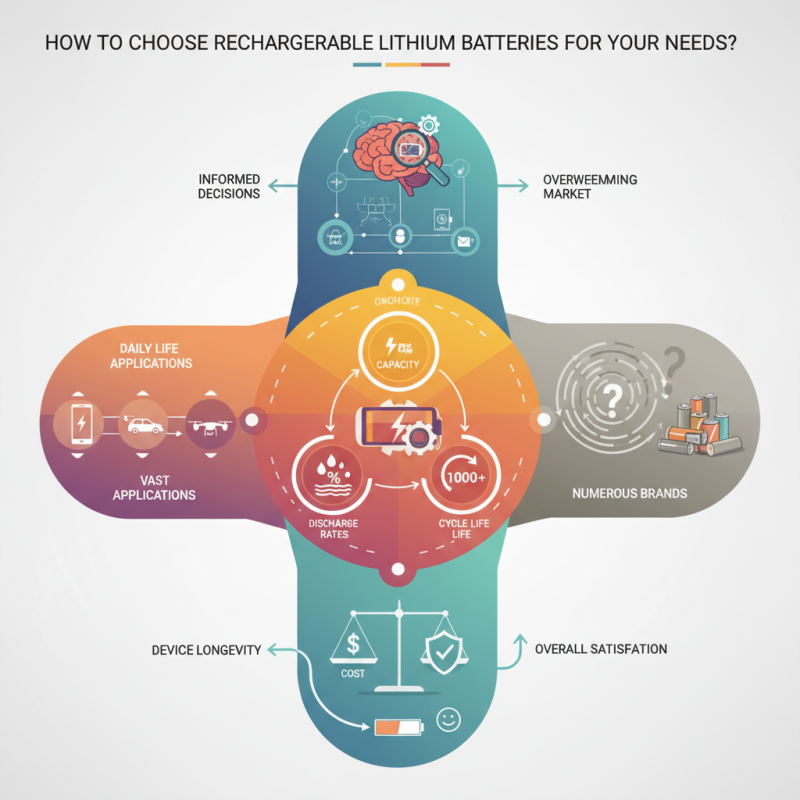
Rechargeable lithium batteries have become integral in our daily lives. From smartphones to electric vehicles, their applications are vast. Understanding the specifications and requirements is vital. Factors like capacity, discharge rates, and cycle life can significantly affect performance.
Yet, even experts acknowledge that the market can be overwhelming. Numerous brands and models exist, each claiming superiority. It can be easy to get confused or misled.
Taking the time to research can lead to better choices. Balancing quality and cost is essential. A wise choice in rechargeable lithium batteries can enhance not just device longevity, but overall satisfaction as well.
Understanding the Basics of Rechargeable Lithium Batteries
Understanding the basics of rechargeable lithium batteries is crucial for informed decision-making. Lithium batteries are popular due to their high energy density. They can store more energy compared to traditional batteries, making them ideal for various devices. According to a recent industry report, the global lithium-ion battery market is expected to grow at a CAGR of approximately 18% from 2021 to 2028. This growth highlights the increasing reliance on these batteries in consumer electronics and electric vehicles.
Battery chemistry varies significantly within the lithium category. Different types offer distinct advantages and drawbacks. For example, lithium iron phosphate (LiFePO4) batteries are praised for their safety and cycle life. However, they have a lower energy density than lithium nickel manganese cobalt (NMC) batteries. Professionals must assess specific needs, such as power output and discharge rates, before making a choice. Some may assume all lithium batteries are the same, but that could lead to ineffective solutions.
The age and usage history of a lithium battery can impact its performance. A battery’s capacity diminishes over time, often requiring replacement. Reports indicate that many users underestimate this factor. Regular assessments of battery health are essential. Recognizing the signs of decreased performance can help prevent failures. Awareness is key to maintaining reliable energy sources in today's technology-driven world.
Identifying Your Device's Power Requirements
When selecting rechargeable lithium batteries, understanding your device's power requirements is crucial. Devices vary significantly in their energy needs. For instance, power tools typically require high-capacity batteries (3000mAh or more), while remote controls may only need around 600mAh. The discrepancy in these numbers highlights the importance of knowing exactly what your device demands.
To assess your needs effectively, consult the manufacturer’s specifications for your device. These documents often provide detailed information on voltage and capacity. Battery life is another factor to consider. High-drain devices will deplete batteries quickly. A recent industry report from the International Energy Agency (IEA) indicated that properly matching battery capacity to device requirements can enhance efficiency by 20-30%.
Tip: Always choose batteries with slightly higher capacities than needed. This can prevent premature failure and provide flexibility during use. Also, think about the number of cycles a battery can go through before performance drops. Balancing capacity and cycle life ensures longevity, reducing waste in the long run. Reflect on how often you use the device and choose accordingly. A well-informed decision minimizes frustration and maximizes performance.
Evaluating Battery Capacity and Performance Ratings
When selecting rechargeable lithium batteries, evaluating battery capacity and performance ratings is crucial. Battery capacity, measured in milliamp hours (mAh), indicates how long a battery can power a device. For instance, a 2000 mAh battery can theoretically last twice as long as a 1000 mAh battery if both are used in identical conditions. However, real-world performance often deviates from these numbers due to factors like energy efficiency and load requirements.
Performance ratings extend beyond capacity. They encompass voltage levels, charge cycles, and discharge rates. A battery with a higher voltage may deliver more power, enhancing device performance. Additionally, the industry standard suggests that most lithium batteries endure about 300 to 500 charge cycles before significant capacity loss occurs. Yet, some users might notice a drop in efficiency much earlier, which can be frustrating. It's key to choose batteries suited to specific applications to avoid premature failure.
In practice, understanding these specifications can be complex. Many users find themselves confused by technical jargon and varying manufacturer standards. Discrepancies in performance can stem from factors like temperature sensitivity and manufacturing quality. Hence, seeking batteries with reputable certifications and reviews can help ensure reliability and performance in real-life usage.
How to Choose Rechargeable Lithium Batteries for Your Needs? - Evaluating Battery Capacity and Performance Ratings
| Battery Type | Capacity (mAh) | Voltage (V) | Charge Cycles | Discharge Rate (C) | Weight (g) |
| 18650 | 2500 | 3.7 | 500 | 3 | 45 |
| 21700 | 4000 | 3.7 | 600 | 3 | 68 |
| CR123A | 1500 | 3.0 | 300 | 1 | 35 |
| LiPo | 5000 | 3.7 | 300 | 30 | 120 |
| AA | 2000 | 1.2 | 1000 | 2 | 26 |
Choosing Between Different Lithium Battery Chemistries
When selecting a rechargeable lithium battery, understanding the various lithium battery chemistries is vital. Lithium-ion (Li-ion) batteries are the most commonly used. They offer high energy density, making them ideal for consumer electronics. According to industry studies, Li-ion batteries can provide energy densities of 150 to 200 Wh/kg. This translates to longer run times for devices, a key consideration when making a choice.
Another option is Lithium Iron Phosphate (LiFePO4) batteries. While they have lower energy density, ranging from 90 to 120 Wh/kg, they boast superior thermal stability. This makes them safer for applications where overheating could be a concern. Reports from battery research agencies indicate that LiFePO4 batteries can last over 2,000 charge cycles. This longevity can reduce overall costs, despite their higher upfront price.
While choosing a battery, consider the intended use. For example, choose Li-ion for lightweight portability. However, for applications where safety is paramount, LiFePO4 may be preferred. The right chemistry also impacts discharge rates, which is crucial for high-drain devices. A thorough assessment of your needs and a deep dive into technical specifications will help in making the best choice.
Comparison of Different Lithium Battery Chemistries
This chart compares the energy density of several lithium battery chemistries, showcasing their efficiency for various applications.
Assessing Lifespan, Safety Features, and Brand Reliability
When choosing rechargeable lithium batteries, safety features are crucial. Look for batteries with built-in protection circuits. These circuits help prevent overheating, overcharging, and short circuits. A battery with these protections significantly enhances user safety.
Consider the lifespan of the battery as well. The average cycle life for lithium batteries is typically around 500 to 2000 charge cycles. However, this can vary widely. It's important to recognize that higher capacity often means longer lifespan, but this isn't always the case. You may notice variations among different brands, which can leave you wondering about reliability.
Brand reliability plays a big role in your decision as well. Trusted brands usually offer better after-sales support. They often provide warranties that can reflect their confidence in product durability. Research reviews and user feedback before making a purchase. Some brands, while popular, may not always deliver consistent quality. It's wise to weigh personal experiences while considering expert opinions.