How to Choose the Right Diaphragm Vacuum Pump for Your Needs?
Choosing the right diaphragm vacuum pump is crucial in various industrial applications. Dr. Emily Larson, a respected expert in vacuum technologies, emphasizes, “Selecting a vacuum pump is not just about specifications; it’s about understanding your unique needs.” This statement reflects the nuanced considerations involved in making an informed choice.
Diaphragm vacuum pumps come in various sizes and capabilities. Factors like flow rate, ultimate vacuum level, and compatibility with substances matter greatly. Each application may demand different specifications. You might think, “Is a high-flow pump always better?” The answer is more complex. A pump that meets your needs well can outperform a more powerful option in certain contexts.
Understanding these complexities is essential for reliable performance. Investing time in research and expert advice can enhance your decision-making process. Reflecting on your specific requirements and potential challenges will lead to better outcomes. Balancing specifications with application needs is key when selecting a diaphragm vacuum pump.

Understanding Diaphragm Vacuum Pump Types and Their Applications
Diaphragm vacuum pumps are essential in various industries, selected based on specific applications and requirements. They are broadly categorized into two types: those with a single diaphragm and those with a double diaphragm.
Single diaphragm pumps are often utilized in laboratories. They are reliable for low to medium vacuum applications. Conversely, double diaphragm pumps, known for their enhanced efficiency, are favored in industries like food processing and pharmaceuticals.
Industry reports indicate that the diaphragm vacuum pump market is expected to grow significantly. It is projected to reach a value of over $1 billion by 2027, driven by rising demand for clean, oil-free processes. In the pharmaceutical sector, for instance, these pumps play a crucial role in ensuring product integrity and compliance with stringent regulations. However, the choice of pump cannot solely rely on these statistics. Evaluating the specific requirements, such as the Pumping speed and Chemical compatibility, is imperative.
Moreover, it is important to consider the operational environment. Some diaphragm pumps may struggle in high-temperature settings. Others may not handle corrosive substances effectively. This lack of adaptability can lead to increased maintenance costs. Thus, careful consideration is essential when selecting a diaphragm vacuum pump.
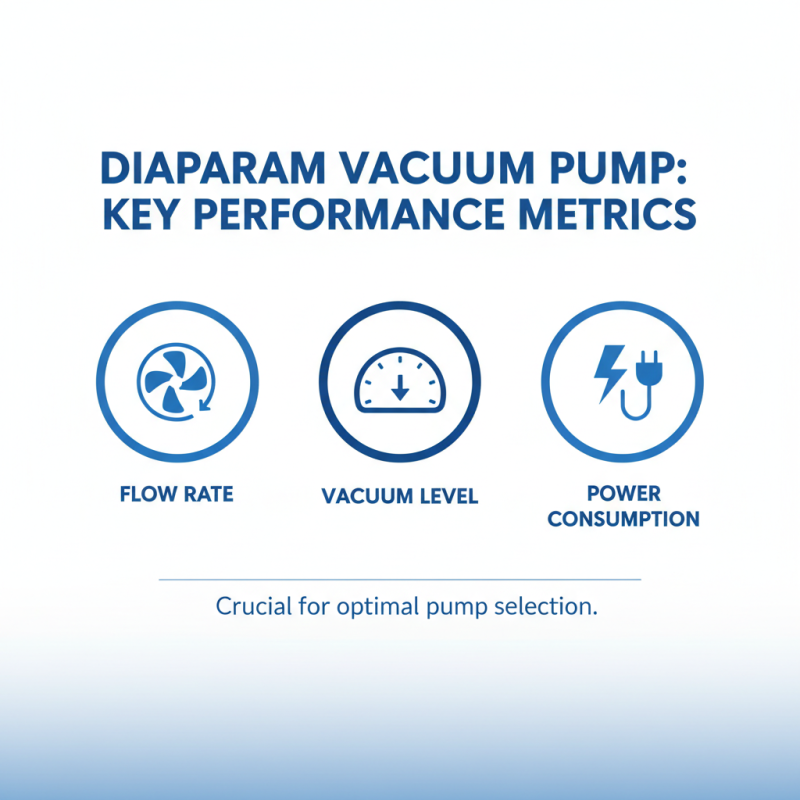
Key Performance Metrics: Flow Rate, Vacuum Level, and Power Consumption
Choosing the right diaphragm vacuum pump involves understanding key performance metrics. Among these, the flow rate, vacuum level, and power consumption are paramount.
The flow rate measures how quickly the pump can move air or vapor. A typical diaphragm pump can achieve a flow rate between 1 to 20 cubic meters per hour. This variation can significantly impact operational efficiency. If your application requires a rapid evacuation, selecting a pump with a higher flow rate is essential. However, pumps with higher flow rates may also consume more power, making it vital to balance these factors.
Vacuum level indicates the minimum pressure the pump can achieve. For many applications, a vacuum level around 0.5 mbar or lower is ideal. Achieving this level consistently is crucial. Some applications may even require ultra-high vacuum levels, which pose challenges regarding power consumption. Not all diaphragm pumps can handle these demanding conditions efficiently, leading to higher operational costs and potential equipment stress.
Power consumption is another critical metric. Efficient pumps can save energy and reduce operational costs. It's not uncommon for diaphragm pumps to operate anywhere from 200 to 800 watts. Monitoring power usage can lead to cost savings over time. Reflecting on energy efficiency will ensure that your pump choice aligns with both performance needs and budget constraints.
Material Compatibility: Selecting Pumps Based on Chemical Resistance
When selecting a diaphragm vacuum pump, material compatibility is crucial. Certain chemicals can corrode or degrade pump components. Therefore, understanding chemical resistance is essential. The wrong choice could lead to equipment failure or safety hazards. Take time to evaluate the chemicals you will use. This will guide you in picking the right materials.
Different materials offer various levels of resistance. For instance, PTFE provides excellent resistance to acids. Rubber may work well for water-based fluids but could fail against stronger solvents. It’s vital to weigh the pros and cons of each option. Consulting with experts can offer insights that might not be obvious initially.
Additionally, consider performance requirements alongside material choice. Not all pumps can handle the same vacuum levels. If you need high efficiency, ensure the materials align with performance standards. Reflecting on real-world applications can reveal past issues with material choices. This process can be complex, and it's okay to seek help to avoid costly mistakes. Making informed decisions ultimately leads to reliable operations.
How to Choose the Right Diaphragm Vacuum Pump for Your Needs? - Material Compatibility: Selecting Pumps Based on Chemical Resistance
| Pump Type |
Material Compatibility |
Temperature Range (°C) |
Max Vacuum (mbar) |
Typical Applications |
| PTFE Diaphragm Pump |
Strong acids, alkalis, solvents |
-20 to 120 |
0.1 |
Chemical processing, laboratory applications |
| Neoprene Diaphragm Pump |
Many chemicals, oils |
-10 to 70 |
0.2 |
Industrial processes, HVAC systems |
| Silicone Diaphragm Pump |
Food products, pharmaceuticals |
-40 to 100 |
0.5 |
Food processing, medical applications |
| Viton Diaphragm Pump |
Aromatics, fuel, solvents |
-20 to 200 |
0.1 |
Chemical and petroleum industries |
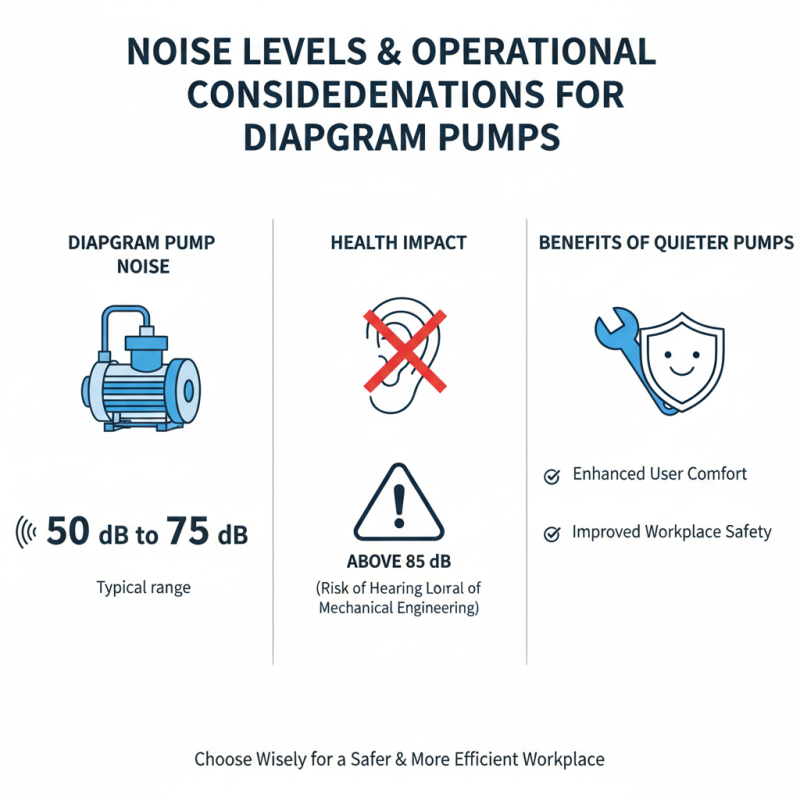
Noise Levels and Operational Considerations for Diaphragm Pumps
When selecting a diaphragm vacuum pump, noise levels play a significant role in operational efficiency. Generally, diaphragm pumps produce noise levels ranging from 50 dB to 75 dB, depending on their design and application. A study from the International Journal of Mechanical Engineering found that exposure to noise levels above 85 dB can lead to hearing loss. Thus, choosing a quieter model can enhance user comfort and workplace safety.
Consider factors such as pump insulation and mounting options when evaluating noise levels. Some pumps offer vibration-damping features, which can significantly reduce operational noise. In laboratory environments or sensitive applications, a pump producing less than 60 dB is ideal. Checking product specifications for decibel ratings will ensure compliance with workplace noise regulations.
Tips: Always assess your operational environment before making a decision. Ensure to factor in the cumulative noise from multiple pumps in close proximity. Regular maintenance is crucial for maintaining performance and minimizing noise, so prioritize routine checks. Evaluate if even slight noise reductions align with your specific application needs. Balancing noise levels and operational efficiency is vital for long-term equipment satisfaction.
Maintenance Requirements and Lifespan Estimates for Diaphragm Pumps
Diaphragm vacuum pumps are essential for various applications. Understanding their maintenance requirements is key to ensuring longevity and optimal performance. Regular maintenance includes checking the diaphragm for wear. According to industry reports, a well-maintained diaphragm pump can last anywhere from 5 to 15 years. However, environmental factors can significantly impact lifespan. High temperatures and corrosive substances may accelerate wear.
Monitoring oil levels and replacing filters is crucial. Many professionals overlook filter maintenance, leading to reduced efficiency. A lack of attention can decrease pump efficiency by over 30%. Knowing how to perform these checks can extend the pump's lifespan. Some facilities implement a preventive maintenance schedule, reducing the need for costly repairs.
Periodically inspecting seals and valves also helps maintain function. A small leak can result in energy waste and reduced vacuum pressure. Surveys suggest that up to 20% of users experience issues due to inadequate maintenance. By integrating a structured approach and dedicating time to maintenance, users can mitigate risks and enhance the reliability of their diaphragm vacuum pumps.