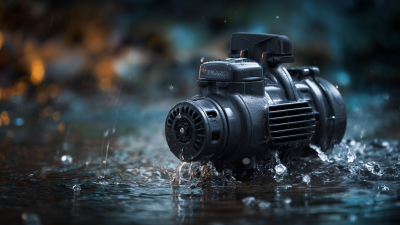
China Top Water Pump Motor Manufacturers and Suppliers
China’s water pump motor industry is moving from low-cost production toward measurable efficiency, reliability, and application-specific engineering. This change matters because motors drive many pumps in agriculture, buildings, factories, and municipal networks. The International Energy Agency reports that electric motor systems consume roughly 45% of global electricity. Pumping equipment represents a meaningful share of that demand.
Efficiency cannot be judged by the nameplate alone. The U.S. Department of Energy’s Improving Pumping System Performance sourcebook explains that system design, flow control, pipe friction, maintenance, and motor selection jointly affect energy use. A correctly sized water pump motor can reduce throttling losses and improve operating stability. An oversized unit may appear powerful, yet waste electricity every hour. That uncomfortable detail is often missed.
Rotating-equipment authority Heinz P. Bloch states, “A pump system is not a pump.” His observation is practical. Buyers should examine hydraulic duty, insulation class, protection rating, service factor, bearing quality, testing records, and after-sales support. China’s leading manufacturers and suppliers increasingly provide IE3 and IE4 motor options, factory testing, customization, and export documentation. However, supplier claims still require verification. Certificates can be valid, incomplete, or misunderstood.
This guide compares China’s top water pump motor manufacturers and suppliers through technical capability, production experience, efficiency performance, quality control, and international service. It also considers details visible in real installations: vibration near the coupling, heat around the terminal box, seal leakage, and unstable voltage. Data from the IEA and U.S. DOE provide useful context, but field conditions remain decisive. No ranking should replace a site-specific engineering assessment.
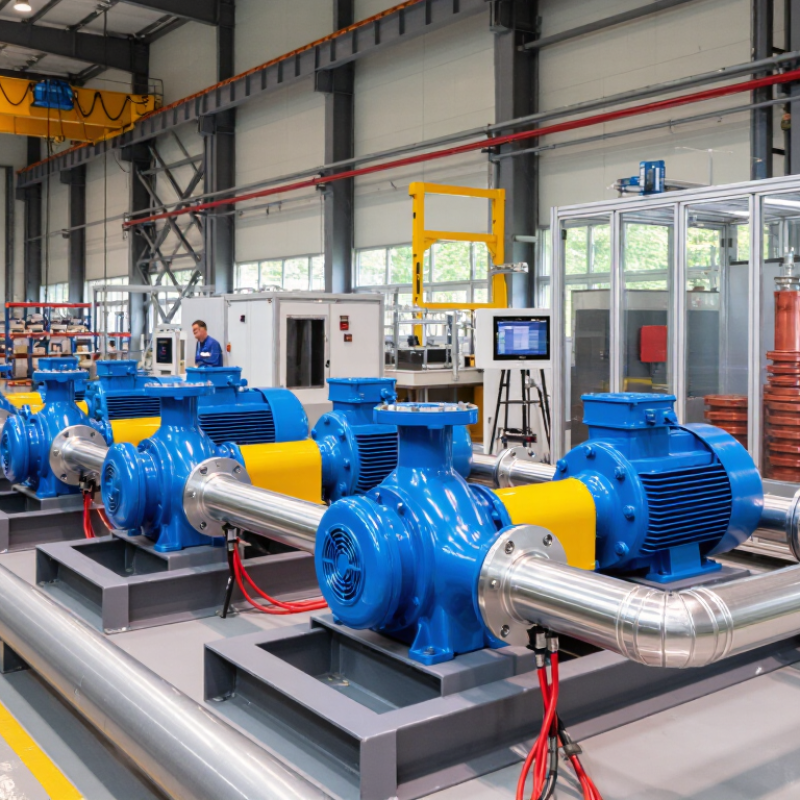
What Are Water Pump Motors and How Are They Used?
Water pump motors convert electrical energy into mechanical rotation, driving an impeller or rotor that moves water through pipes. A complete pumping unit usually includes a motor, pump casing, shaft, seals, bearings, and controls. The motor supplies torque; the pump creates flow and pressure. They are different jobs, but they must work together.
These motors serve many settings. Buildings use them for pressure boosting, drainage, and chilled-water circulation. Farms depend on them for irrigation. Municipal systems use larger units for water treatment and distribution. In a typical installation, a motor may run for hours beside a storage tank, pushing water through narrow pipes and multiple valves. The International Energy Agency reports that electric motor systems consume about 53% of global electricity. Pumping deserves careful attention within that figure.
Correct sizing matters. Oversized motors can waste energy through throttled valves and frequent cycling. Undersized motors may overheat when demand rises. The U.S. Department of Energy’s pumping-system guidance recommends checking flow, head, operating hours, and control methods before selection. Variable-speed drives can reduce speed during low demand, although savings depend on the system curve and maintenance quality. Field conditions are often less perfect than design drawings suggest. Dirt, air leaks, worn seals, and poor alignment quietly reduce performance. Buyers should request efficiency data, protection ratings, test methods, and service records from qualified suppliers. Data helps, but installation evidence matters more.
China’s Water Pump Motor Manufacturing Industry
China’s water pump motor manufacturing industry has developed around dense supply chains, skilled technicians, and flexible production capacity. Manufacturers produce motors for agricultural irrigation, building services, drainage, and industrial circulation systems. Common production stages include copper winding, rotor balancing, insulation treatment, housing machining, and final load testing. Reliable suppliers usually document these processes carefully. They also provide efficiency data, protection ratings, and test records for each motor series.
Practical experience shows that performance depends on more than rated power. A motor running in a dusty pump room may need stronger protection than one used indoors. Voltage stability, water temperature, starting frequency, and shaft alignment also affect service life. Quality-focused factories inspect winding resistance, vibration, noise, temperature rise, and waterproof sealing. However, production is not always perfect. A rushed inspection can miss a loose terminal or slight imbalance. This is why traceable testing and sample verification remain essential.
Tips: Confirm the pump’s flow, head, voltage, frequency, and installation environment before ordering. Ask for efficiency curves and routine test reports. Check whether spare components are available locally or through the supplier. For larger projects, request a production sample before full-volume manufacturing. A clear technical drawing prevents expensive misunderstandings. Also, discuss packaging carefully, because moisture damage can begin during storage, not operation.
Main Types of Water Pump Motors Made in China
China’s water pump motor manufacturers produce several main types for domestic, agricultural, and industrial systems. The right choice depends on flow, head, duty cycle, and installation conditions.
AC induction motors remain common in clean-water pumps and booster sets. They are compact, affordable, and relatively simple to maintain. Single-phase versions suit homes, while three-phase motors handle larger loads. Poor cooling can still shorten their service life. Industrial suppliers often improve this issue with aluminum or cast-iron housings, sealed bearings, and higher insulation classes.
Permanent magnet synchronous motors deliver strong efficiency at changing speeds. Their controllers can adjust output when demand falls, reducing wasted electricity. BLDC motors also support variable-speed operation and fit smaller circulation, filtration, and solar pumping systems. They run quietly. However, their electronic controls need careful protection from moisture, heat, and voltage fluctuation. A cheaper motor may appear attractive, but its controller and spare parts can change the real cost.
Submersible pump motors are sealed for operation underwater, often with stainless-steel shafts and IP-rated protection. Dry-running protection is essential. China-based manufacturers also supply vertical and horizontal motors for centrifugal, sewage, and deep-well pumps. When comparing suppliers, request test data for efficiency, temperature rise, insulation resistance, vibration, and continuous operation. Confirm voltage, frequency, cable length, and starting method before ordering. The categories sometimes overlap, which can confuse buyers. In practice, installation details matter as much as motor type.
China Top Water Pump Motor Manufacturers and Suppliers - Main Types of Water Pump Motors Made in China
| Motor Type | Typical Pump Applications | Common Power Range | Typical Speed | Main Advantages | Important Selection Factors |
|---|---|---|---|---|---|
| Single-Phase Induction Motor | Domestic water supply, garden pumps, small booster pumps, and shallow-well pumps | Approximately 0.12–4 kW | Usually 2,850–2,900 rpm at 50 Hz for two-pole designs | Works with standard single-phase power; simple operation; suitable for light-duty systems | Voltage, starting current, capacitor design, duty cycle, flow, and required head |
| Three-Phase Induction Motor | Industrial pumps, municipal water systems, HVAC circulation, irrigation, and fire-water systems | Approximately 0.75–315 kW or higher | About 1,450–2,950 rpm at 50 Hz, depending on pole count | High reliability, balanced torque, good continuous-duty performance, and broad power availability | Three-phase supply, rated load, efficiency class, enclosure, mounting arrangement, and service factor |
| Submersible Pump Motor | Deep wells, boreholes, drainage, sewage, dewatering, and underwater circulation | Approximately 0.37–250 kW | Commonly 2,850–2,900 rpm at 50 Hz; lower speeds are also available | Compact installation, direct cooling by the pumped liquid, and suitability for flooded environments | Motor diameter, water temperature, insulation, cable sealing, submergence depth, and dry-run protection |
| Vertical or Horizontal Surface-Mounted Motor | End-suction pumps, split-case pumps, multistage pumps, process pumps, and booster sets | Approximately 0.12–500 kW | Typically 1,450 or 2,900 rpm at 50 Hz | Easy inspection and maintenance; adaptable to many standard pump assemblies | Shaft load, coupling method, mounting dimensions, ambient temperature, and installation orientation |
| Permanent Magnet Synchronous Motor | High-efficiency booster systems, variable-speed circulation, HVAC, and smart water equipment | Approximately 0.75–200 kW | Variable speed through an inverter or integrated drive | High efficiency at variable load, compact size, low noise, and precise speed control | Drive compatibility, control protocol, cooling method, permanent-magnet temperature limits, and lifecycle cost |
| Brushless DC Motor | Solar water pumps, compact circulation pumps, dosing equipment, and low-voltage systems | Typically below 5 kW | Variable speed, commonly controlled electronically | High controllability, low maintenance, efficient part-load operation, and compatibility with battery or solar systems | DC voltage, controller protection, electromagnetic compatibility, operating temperature, and battery capacity |
| Variable-Frequency-Drive Motor System | Pressure-constant water supply, irrigation, cooling-water systems, and process applications | Approximately 0.75–500 kW | Adjustable according to frequency and system demand | Energy savings at reduced flow, soft starting, reduced water hammer, and flexible pressure control | Drive rating, minimum motor frequency, harmonic distortion, cable length, cooling at low speed, and control strategy |
When sourcing water pump motors from China, compare rated power, voltage, frequency, phase, speed, efficiency class, ingress protection, insulation class, mounting dimensions, shaft configuration, operating environment, certifications, warranty terms, and compatibility with the selected pump.
How Chinese Manufacturers Produce and Test Pump Motors
Chinese pump motor manufacturers usually begin with material inspection and application review. Engineers confirm power, voltage, speed, insulation class, and operating conditions. Steel laminations are stamped with controlled tolerances. Copper wire is wound around the stator core by automated equipment. Workers then check winding tension and connection points manually. Small errors matter.
After assembly, technicians measure insulation resistance and winding balance. Motors run without load to detect unusual noise, current, or vibration. Selected units receive load testing under controlled conditions. Temperature sensors track the housing, bearings, and windings during operation. Dynamic balancing reduces vibration from the rotor. Water resistance and terminal sealing are also checked when the pump will face humid environments. In practice, no production line is perfect. A loose terminal or imperfect varnish coating can still appear. Reliable factories record these failures instead of hiding them.
Tips: Ask for test standards, inspection records, and sample reports before purchasing. Confirm whether testing reflects your real duty conditions. Check noise, temperature rise, starting current, and continuous running performance. A lower price may reflect fewer tests. It may not. Supplier communication should be clear, technical, and traceable. Enquire about corrective actions when a sample fails. Good documentation often reveals more than polished photographs.
How to Evaluate China’s Water Pump Motor Suppliers
Choosing a Chinese water pump motor supplier requires more than comparing quotations. The International Energy Agency reports that motor-driven systems consume over half of global electricity. Efficiency should therefore guide the evaluation. Ask for rated efficiency, power factor, temperature rise, and service-factor data. Confirm whether testing follows IEC 60034 and pump performance follows ISO 9906. A certificate alone is not enough.
Request a complete performance curve at several operating points. Check flow, head, current, vibration, noise, and efficiency under load. The U.S. Department of Energy notes that pumping systems can represent about 25% of industrial motor energy use. Small efficiency gaps become expensive after thousands of operating hours. Review factory test reports, calibration records, material certificates, and batch traceability. Verify whether the stated copper content and insulation class match the production sample.
Visit the facility, if possible. Watch winding, balancing, sealing, and final testing. Ask how rejected units are isolated. Ask for recent failure statistics and warranty claims. Some suppliers provide polished documents but weak process control. That risk is easy to miss. A third-party inspection can reveal inconsistent bearings, poor coating thickness, or inadequate moisture protection. Evaluate delivery history, spare-parts support, response time, and technical communication. I would also test a small sample before signing a large contract. Paperwork can look perfect. Field performance may not.
Related Posts
-
Ultimate Guide to Choosing the Best Water Pump Motor for Your 2025 Projects
-

Top 10 Water Pump Motors for Efficient Performance?
-
2025 Top 10 High Pressure Pump Innovations for Industrial Applications
-
How to Choose an Electric Diaphragm Pump in 2026?
-
7 Expert Tips to Choose the Right Industrial Pumps for Your Business Success
-

7 Expert Tips to Choose the Best Fountain Pump for Your Garden Water Feature