7 Tips for Choosing a Diaphragm Water Pump

A reliable diaphragm water pump can keep a tank filling, a sprayer working, or a remote cabin supplied. Yet choosing one from a crowded catalog is rarely simple. Pressure ratings, flow claims, materials, power demands, and operating conditions all affect real performance. A pump that looks impressive on paper may struggle when the inlet hose is narrow or the water contains fine sediment.

This guide presents seven practical tips for selecting a diaphragm water pump with greater confidence. It considers application pressure, required flow, voltage, duty cycle, self-priming ability, diaphragm materials, and maintenance access. These details matter in workshops, agricultural systems, boats, and household water setups. For example, a 12-volt pump may suit a mobile sprayer, while a higher-capacity model may be necessary for continuous transfer. Manufacturer data should be checked against your actual hose length, elevation, and water temperature.

Small details matter.

Real-world selection also requires honest judgment. Product specifications can vary between brands, and advertised flow may be measured under ideal conditions. I have seen users focus on maximum pressure while overlooking noise, dry-run limits, or replacement parts. That mistake can turn a low-cost purchase into repeated downtime. No single model fits every installation. Careful comparison, basic calculations, and advice from qualified suppliers can reduce that risk. The following tips will help you ask better questions before spending money, even when the final choice still involves some uncertainty.
7 Tips for Choosing a Diaphragm Water Pump

Understanding How a Diaphragm Water Pump Works

7 Tips for Choosing a Diaphragm Water Pump

Understanding How a Diaphragm Water Pump Works

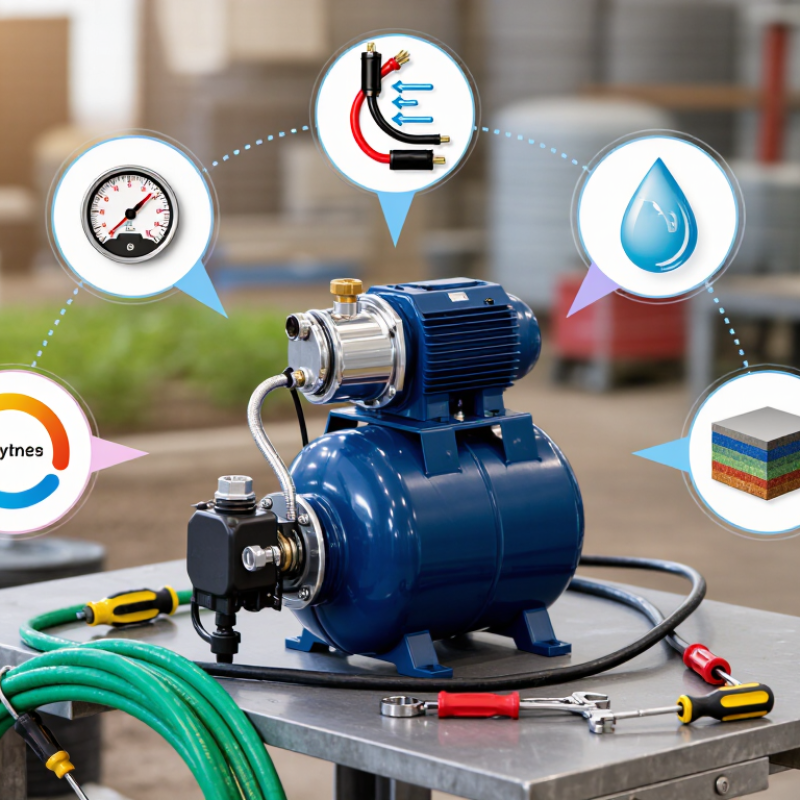
A diaphragm water pump moves fluid through repeated flexing rather than rotating impellers. An electric motor turns a crank or eccentric cam. This motion pulls the diaphragm backward, creating low pressure inside the chamber. Water then enters through the inlet check valve. As the diaphragm moves forward, pressure rises and water leaves through the outlet valve.

This simple cycle explains several useful selection points. Check the required flow rate, pressure, voltage, fluid temperature, and hose size. Also examine the diaphragm and valve materials. Clean water may need different materials than mildly abrasive or chemically treated water. A technician should inspect valve seating and diaphragm movement before installation. Small leaks often begin at loose fittings, not inside the pump.

Diaphragm pumps can handle intermittent dry running better than many centrifugal designs, but this feature is not universal. Read the technical limits carefully. Excessive back pressure can overheat the motor or shorten diaphragm life. Pulsation is another practical concern. A pressure accumulator can smooth the discharge, especially near spray nozzles or sensitive equipment. I used to assume a higher-rated pump was always safer. That assumption can waste energy and strain plumbing. Matching the pump to actual demand is usually more reliable. Listen for irregular clicking, reduced flow, or rapid cycling. These details often reveal air leaks, blocked filters, or worn valves before failure.

Matching Pump Capacity to Your Watering Requirements

Choosing a diaphragm water pump starts with your watering demand, not the pump label. Measure the area, emitter flow, and outlets operating together. Add their flow rates in liters per minute. For example, twenty emitters using two liters per hour require about 0.67 liters per minute. That figure is small, but filling a tank or running a spray nozzle changes it quickly. I once sized a pump from garden area alone. My estimate was too optimistic. Water pressure dropped whenever several lines opened.

Check total head, including vertical lift, pipe friction, filters, and fittings. A pump may deliver its stated flow only at low resistance. Read the performance curve and identify the flow available at your working head. Then allow a reserve of roughly 15 to 25 percent for dirty filters, aging hoses, and seasonal changes. Do not correct poor pipe sizing with an oversized pump. It can waste energy, cycle too often, and stress the diaphragm. Test it properly.

Match the duty cycle to your watering schedule. Intermittent garden zones may need a smaller pump than continuous tank filling. Confirm the water source can recover as quickly as you withdraw it. A pump that outruns a shallow source may pull air and lose prime. Use a pressure gauge during a real watering test, not only published data. Record flow, pressure, and motor temperature after fifteen minutes. Recheck after installation. Soil, fittings, and habits rarely behave exactly as planned.

7 Tips for Choosing a Diaphragm Water Pump: Matching Pump Capacity to Your Watering Requirements

Select a diaphragm water pump by matching its usable flow rate to the watering demand of your application. The recommended pump capacity includes approximately 20% reserve flow to compensate for hose length, elevation, fittings, and pressure loss. Actual requirements vary with nozzle type, irrigation layout, and operating pressure.

Checking Pressure, Flow Rate, and Power Specifications

7 Tips for Choosing a Diaphragm Water Pump

Pressure and flow rate must be read together. A pump rated for 60 psi may deliver much less pressure through a long, narrow hose. Measure pressure at the actual outlet, not only at the pump. Include elevation, fittings, filters, and valve resistance. One metre of vertical lift adds about 0.1 bar of pressure demand. Check the pump curve, if available, and compare its flow at your required pressure. A target of 20 litres per minute means little without the matching pressure.

Power specifications deserve equal attention. Electric models should be checked for voltage, current, duty cycle, and thermal protection. Air-operated models require an air-pressure range and air-consumption figure. Compare input power, not just motor size. The U.S. Department of Energy notes that pumping systems can consume 25–50% of industrial facility electricity. The International Energy Agency reported that water supply and wastewater services use about 4% of global electricity. Efficiency affects operating cost.

A practical check is simple. Run the pump with the intended hose, filter, and fittings. Record pressure, flow, current, and temperature after ten minutes. Do not trust a perfect catalogue number. Field conditions are rarely perfect. I still treat the nameplate as a starting point, not proof. A lower flow setting may reduce wear, but excessive restriction can heat the pump or strain the diaphragm. Leave a realistic safety margin, then question whether that margin is too generous.

Selecting Durable Materials for Water and Operating Conditions

Choosing durable materials for a diaphragm water pump starts with the water itself. Clear water is not always gentle. Dissolved minerals, sand, salt, oils, and cleaning chemicals can attack internal parts over time.

For fresh water, polypropylene or stainless steel housings often provide practical durability. Stainless steel handles repeated use and outdoor exposure well. Polypropylene can reduce weight and resist many common chemicals. The diaphragm requires equal attention. EPDM suits many water applications, while PTFE offers stronger chemical resistance. However, no material fits every condition. Check temperature, pH, pressure, and chemical compatibility before purchasing.

A field lesson is simple: inspect the water, not just the pump. Water from a shallow well may carry fine grit that slowly damages valves. Coastal water can increase corrosion risk. Cold weather may also crack trapped water inside the pump. Protect the unit from freezing. That matters.

Operating habits affect service life, too. A pump running near its maximum pressure creates extra heat and diaphragm stress. Choose materials rated above the expected temperature and pressure. Use a strainer when debris is possible, but do not treat it as a complete solution. It can clog unexpectedly. Regular inspection is better than confident guessing.

I once underestimated mineral buildup during material selection. The pump worked well initially, then flow dropped noticeably. The lesson was uncomfortable but useful: published compatibility charts need real site information. When conditions are uncertain, test a water sample and confirm recommendations with qualified technical personnel.

Comparing Maintenance Needs, Safety Features, and Long-Term Value

A diaphragm water pump should be judged beyond its purchase price. The U.S. Department of Energy reports that pumping systems can consume a major share of industrial electricity. Efficient operation matters over years. Inspect the diaphragm, check valve, and air passages regularly. Small leaks often become expensive failures.

Maintenance needs vary with water quality and duty cycle. Sediment can abrade the diaphragm, while chemical exposure may harden it. Choose replaceable wetted parts and clear service instructions. Hydraulic Institute’s Pump Life Cycle Costs guidance stresses energy, maintenance, and downtime—not only initial cost. A cheaper pump may demand more frequent part replacement. That is easy to miss.

Safety deserves practical attention. Look for pressure relief, thermal protection, dry-run protection, and secure hose connections. These features reduce overheating, rupture, and uncontrolled discharge risks. ISO 12100 emphasizes risk reduction through safe design and protective measures. Installation still matters. A safety feature cannot correct blocked outlets or poor wiring. In field use, I would record pressure, flow, noise, and replacement dates. The record may be imperfect. It still reveals patterns. Long-term value comes from predictable service, accessible parts, moderate energy use, and fewer interruptions. Compare those costs before choosing a diaphragm water pump.

7 Tips for Choosing a Diaphragm Water Pump - Comparing Maintenance Needs, Safety Features, and Long-Term Value

A practical comparison guide for evaluating diaphragm water pumps by operating conditions, service requirements, safety, and total ownership value.

Tip Selection Focus Key Criterion Practical Benchmark Why It Matters
1 Match the Pump to the Required Flow Rated flow versus actual demand Typical range: 10–80 L/min
Select a pump whose rated flow exceeds the normal operating requirement by approximately 10–20%, while confirming performance at the intended pressure.
A pump operated continuously at its maximum rating may experience faster diaphragm and valve wear. Oversizing too far can increase energy use, pressure cycling, and purchase cost.
2 Check Pressure and Lift Requirements Discharge pressure, suction lift, and total dynamic head Common pressure range: 2–7 bar
Verify the pump curve at the required discharge pressure. For suction applications, confirm the manufacturer's maximum self-priming or suction-lift rating rather than relying only on the nominal flow.
Flow normally decreases as pressure and system resistance increase. Correct sizing helps prevent inadequate delivery, excessive cycling, and unnecessary mechanical stress.
3 Evaluate Liquid Compatibility Diaphragm, valve, housing, and seal materials Water service materials
EPDM is commonly used for water and many mild aqueous solutions; PTFE offers broad chemical resistance; nitrile rubber is often selected for oils but is not a universal choice for every water-treatment chemical.
Material compatibility affects service life, leakage risk, and water quality. Always compare the exact liquid temperature, concentration, pH, and additives with the component compatibility chart.
4 Compare Maintenance Requirements Wear parts, inspection intervals, and service access Routine checks: monthly to quarterly
Inspect connections, tubing, strainers, valves, and visible leaks regularly. Diaphragms and check valves are wear parts; their replacement interval depends on pressure, duty cycle, liquid quality, and operating temperature.
Tool-accessible covers, replaceable valve assemblies, and readily available repair kits can reduce downtime and labor costs over the pump's service life.
5 Prioritize Safety and Protection Features Over-pressure, dry-run, thermal, and electrical protection Recommended safeguards
Look for an integrated pressure switch or bypass protection where applicable, thermal overload protection on electric models, appropriate electrical ingress protection, and a fuse or circuit breaker sized for the installation.
These features help limit damage caused by blocked outlets, stalled motors, overheating, voltage faults, or accidental operation without sufficient liquid. They do not replace correct installation or supervision.
6 Consider Noise, Vibration, and Installation Operating environment and mounting arrangement Installation essentials
Use a rigid, level mounting surface; avoid sharply bent hoses; install a suitable inlet strainer where required; and use flexible connectors or vibration isolation when noise and pulsation are concerns.
Diaphragm pumps produce pulsating flow. Proper mounting and correctly sized hoses can reduce vibration, connection fatigue, noise, and pressure fluctuations.
7 Calculate Long-Term Value Total cost of ownership, not only purchase price Compare five cost categories
Assess purchase price, electricity or compressed-air consumption, replacement diaphragms and valves, planned maintenance labor, and the financial impact of downtime.
A pump with a higher initial price may provide better value if it uses less energy, lasts longer under the same duty, has accessible wear parts, and minimizes service interruptions.

Important: Performance ranges and maintenance intervals are typical industry planning figures, not universal ratings. Confirm the pump curve, material compatibility, electrical specifications, protection level, and service instructions for the exact application before purchase or installation.